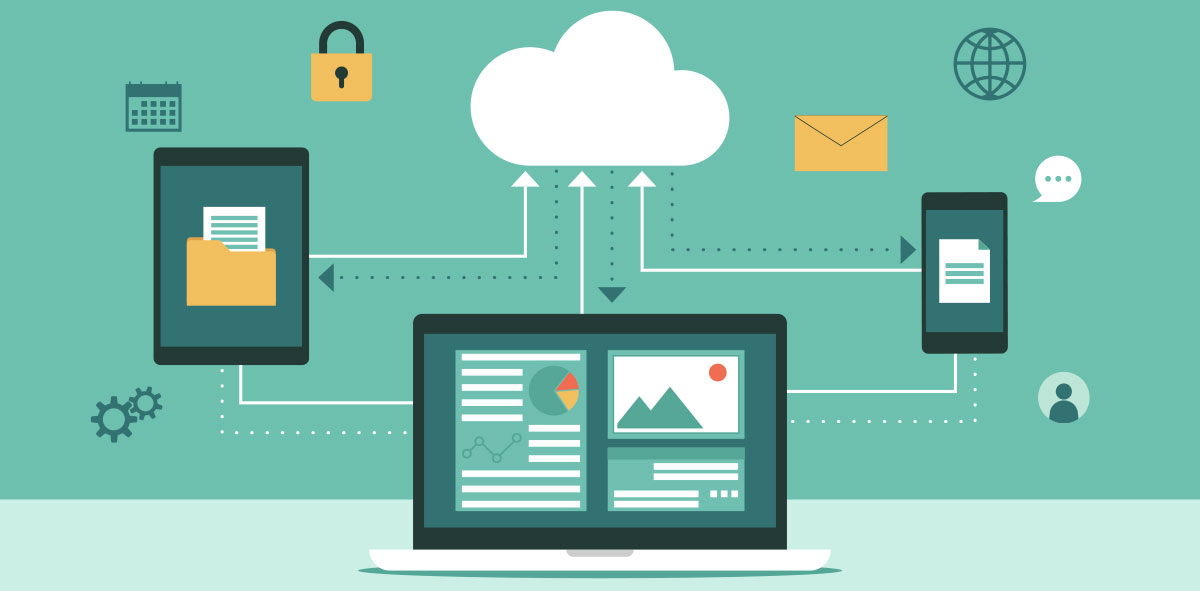
We live in a technology age where there is an app for everything. There are apps for to-do lists, scheduling, notes, connecting with your team, project management, email marketing, forms and surveys, document signing, and workflows. These are just a few reasons why business people use apps. Although each app helps with a specific productivity need, using several different productivity apps has its challenges.
- A user account and login are required for each app, so you have to manage all of your usernames and passwords
- Many of the apps do not integrate with each other and if they do, there is an added cost
- Your data, whether it is client-based or administrative task-based, is spread across multiple platforms
- Each person on a sales team has their own preferred apps for productivity and selling
These challenges can affect your business. Using multiple apps to manage productivity can cause more work for you, increase the risk of managerial errors, and even produce Follow Up Fatigue. This is especially true when everyone uses a different app based on preference. Let’s shape this into a scenario to that we can all relate.
Ken, who owns and runs the fictitious Ken’s Kitchen Remodel, has three business development people, two estimators, and a project manager. They all have company-issued smartphones and tablets, but they use different apps to handle their responsibilities. Ken loves that they embrace technology, but it is starting to affect business and even relationships. Here are a couple of situations that caused tension:
- The business development manager creates a document for an estimator before he goes to a home to assess the project. The estimator is often frustrated because he needs to convert the document into a format so he can open it on his tablet.
- The project manager forgets to send the change of scope to the business developer when they encounter an unforeseen issue during the scope, so Ken has to eat the cost of the scope change.
- One of the business developers records a conversation in a notes app they had with a client, but the other business developer does not know about the conversation and looks foolish when they bring up the same topic to the client.
Productivity was not as tight as it should be. Communication was falling between the cracks. Tasks were being done twice and differently. Clients were getting frustrated because they have to repeat themselves or follow up…again. Ken was losing money from inconsistent and inefficient productivity. He needs a solution.
Solution: Centralize team productivity with a CRM
Ken has a CRM and uses it to manage clients, but he does not use it for productivity. He and his team use several different apps for productivity, and it is time to centralize. Most CRMs have productivity modules to help sales and business teams manage clients, tasks, and marketing together. How would this look for a company like Ken’s Kitchen Remodel?
Email Communication – CRMs have email capabilities so that businesses can automate messages and maintain consistency with branded templates. Email communication for each contact is recorded in the CRM, so everyone knows the level of engagement and the outcome.
Estimates – When salespeople use different apps, the estimates are not always shared or the same. A CRM ensures that everyone is using the same form for estimates and each estimate is accessible by the whole team.
Project management – Whether it is a phone conversation, a change in scope, timeline, or team assignments, the CRM can be used as a central hub for projects. The CRM brings the customer, project, scheduling, and those involved in the project together. This prevents overbooking, missed deadlines, and other customer frustration.
Assigned tasks – When everyone uses their own task management/to-do app, it is very difficult to manage. This causes Follow Up Fatigue because the one who assigns needs to remember to follow up. In a CRM, tasks can be centralized, assigned, re-assigned (if necessary), and marked complete. Follow-up is minimized because it is tracked in one place.
Forms – A CRM gives you the ability to create forms and surveys. When a form is submitted, a new record is created or updated. When a separate form app is used to collect data, this causes extra work for the salesperson. They have to copy the data into the CRM which increases the risk of incorrect data or missing time-sensitive information. Centralizing forms remove these risks and are accessible by the whole team.
Conclusion
Like Ken and his team, you may be using several different productivity apps which is making it difficult to manage data and tasks. A CRM can help you centralize your productivity needs, get your team on the same page, and reduce Follow Up Fatigue. If you would like to see how this would look for your business, contact us to schedule a demo for X2CRM, an open-source CRM with enterprise support to help you sell more with less effort.