
Buyer’s Journey vs the Customer’s Journey. What’s the difference?

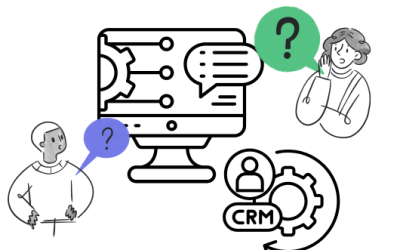
[vc_row][vc_column][vc_column_text]We have all heard the term, Buyer’s Journey. We have also heard the term, Customer’s Journey. Do they mean the same thing? If they are the same, do I pick a term and run with it? If they are not, which “journey” do I build my CRM’s sales funnel around?

We hope to answer these questions. Let’s look at each journey.

Buyer’s Journey

The buyer’s journey is the steps a consumer takes to purchase a product or service. The stages of each journey are:

  • Awareness – The buyer has a problem, or a need and they are looking for a product or service as a solution.
  • Consideration – The buyer understands their problem. They have found potential solutions (different products or companies) and begin to research which one will help them.
  • Decision – The buyer has picked a product or service. They move forward with the transaction.

Here’s an example. Sandra’s family is prone to allergies and 2 of her 3 children have a weak immune system (awareness). She needs better air quality in her home, so she begins to research products that clean the air in her home. She sees that options include portable systems and systems that connect with her furnace (consideration). Sandra decides she wants a system that integrates with her furnace and narrows the choice to businesses that do installations (decision).

Customer’s Journey

The customer’s journey starts after the buyer’s journey. The customer’s journey is focused on their experience and continued engagement with you after the purchase. It involves all touchpoints as a customer from social media to customer service.

We will continue the example. Sandra purchased the product and installation service. She has moved from the buyer’s journey into the customer’s journey. Her customer journey will regularly interact with the business. She will receive automated email updates (driven by the business’s CRM). She will be invited to follow the business on social media where she can see product updates and service promotions. Customer service will be available if Sandra has issues with her air quality product. Her customer journey will be ongoing.

So what’s the Difference?

The buyer’s journey and the customer’s journey have different goals for the customer. Each journey produces different results:

  • A customer must go through the buyer’s journey first to become a customer.
  • The buyer’s journey is pre-transaction as the buyer is learning about the best solution for their need. The customer’s journey is post-transaction which is about nurturing and building loyalty.

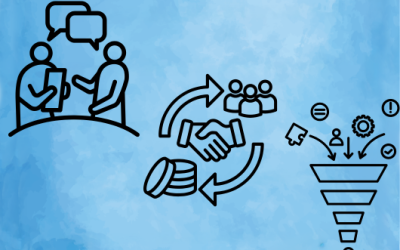
So, this begs the question, which journey should I build my CRM’s sales funnel around? The answer is both. Although they are different, your sales funnel needs to include both. If you focus the use of your CRM solely on the buyer, your customer retention is going to suffer. At the same time, if you focus your CRM strategy on nurturing the customer, you will have a difficult time converting buyers because most are not ready to buy at the top of the sales funnel.

Over the course of the next couple of blogs, we are going to dive into this deeper. Although the journeys are different, you can use CRM to guide prospects from buyer to customer. Our next blog will start with practical ways to use your CRM to guide the buyer through awareness, consideration, and decision.

If you have questions about implementing a CRM strategy and how to effectively use it for your company, contact us at 301-332-0613 or fill out the contact form. We want to help you attract, nurture, and convert more leads to customers.
Contact Us

We want to help you grow your business

[/vc_column_text][/vc_column][/vc_row][vc_row][vc_column][vc_custom_heading text=”More Blog Topics” font_container=”tag:h2|text_align:center” use_theme_fonts=”yes”][vc_empty_space][vc_basic_grid post_type=”post” max_items=”2″ element_width=”6″ orderby=”rand” grid_id=”vc_gid:1613499450733-6e24fd68-b413-9″ taxonomies=”4, 25″][/vc_column][/vc_row]

TOFU, MOFU, and BOFU Magnets

When you stack magnets, their power is exponential.


Stacking Magnets


Think about your best clients and what actions they took when first buying from you. Build magnets based on these actions. Here are examples of how to stack magnets:


Fractional CFO Service Company


  • TOFU – Cash-Flow Forecast Template for Founders.
  • MOFU – 3-part email class on “Scaling from 500K to 5M using videos.
  • BOFU – Free 30-minute “Financial Check” with a 90-day pilot option. 


. Residential HVAC / Plumbing Contractor


  • TOFU – Seasonal Maintenance Checklist to Avoid Breakdowns 
  • MOFU – Educational videos on “What To Check Before Calling For Help. 
  • BOFU – Free home system inspection plus a discount on annual plans. 


Specialty Retailer or E-Commerce Shop


    • TOFU – “Find Your Perfect Product Style” quiz with personalized recommendations and a small first-order discount. 
    • MOFU How-To Guides, Lookbooks, and Comparisons
  • BOFU – Limited-time starter kit, cart-abandonment coupons, and free shipping.

This “magnet stack” approach—clear value at each stage, linked to your core offer—will pull the right prospects from curiosity to commitment.


Getting it Done


Apex Advisory Group, a professional services firm, had four sales reps plus the owner selling and servicing clients, but deals were inconsistent and follow-up was ad-hoc.


Apex engaged CCC, www.cccsolutions.com, to help build their sustainable sales pipeline. The team focused on the ideal client’s journey, selected magnets, and created a sales process to manage prospects. The magnets were:


    • TOFU – Risk and Readiness Checklist.
  • MOFU – Quarterly Webinars and Case Studies
  • BOFU – Business Circle Invitation


CCC set up X2CRM to segment, track, and reach prospects and remind salespeople to follow up. At every stage, the CRM captured new information and responded based on specific prospect actions.


Apex Today


Apex now has a repeatable sales engine: Their magnets consistently attract new prospects, X2CRM nurtures and scores them, and the sales team focuses its energy on the best opportunities.


With CCC Solutions guiding strategy and configuration, Apex built a sustainable, measurable pipeline that increased sales while reducing the chaos of manual follow-up.


FREE ebook:
Build More Revenue with Less Follow Up Fatigue

Recent Blogs

Use Lead Magnets to Build Your Sales Engine

Use Lead Magnets to Build Your Sales Engine

Lead magnets are valuable offers that attract the right people, capture their contact information, and lead them to purchase. Concurrently, you get to see who the real prospects are!   Core Magnet Principles   Strong magnets:   Offer specific value...

Get a CRM – Are You Nuts

Get a CRM – Are You Nuts

For professional service companies like Edemco, a team of six, including three sales reps, the decision to implement a CRM wasn’t taken lightly, said Edith Demona, Edemco’s owner.  Edemco’s team felt growing pains as it managed client service, marketing, and sales. ...

Your Personal Touch Sells

Your Personal Touch Sells

Your personal touch is the reason buyers buy from you. As a seller of goods or services, connecting personally with your buyer builds the relationship needed to increase sales conversions.   Personal Touch Obstacles   Hurdles that reduce personalized...